POLLEN Conference — Storytelling Political Ecology from Latin America
Across two sessions, a panel convened by Joel E. Correia, José Roberto Porto de Andrade Junior and Silvia de Melo Futada brought together twelve presentations and scholars affiliated with institutions in ten countries.
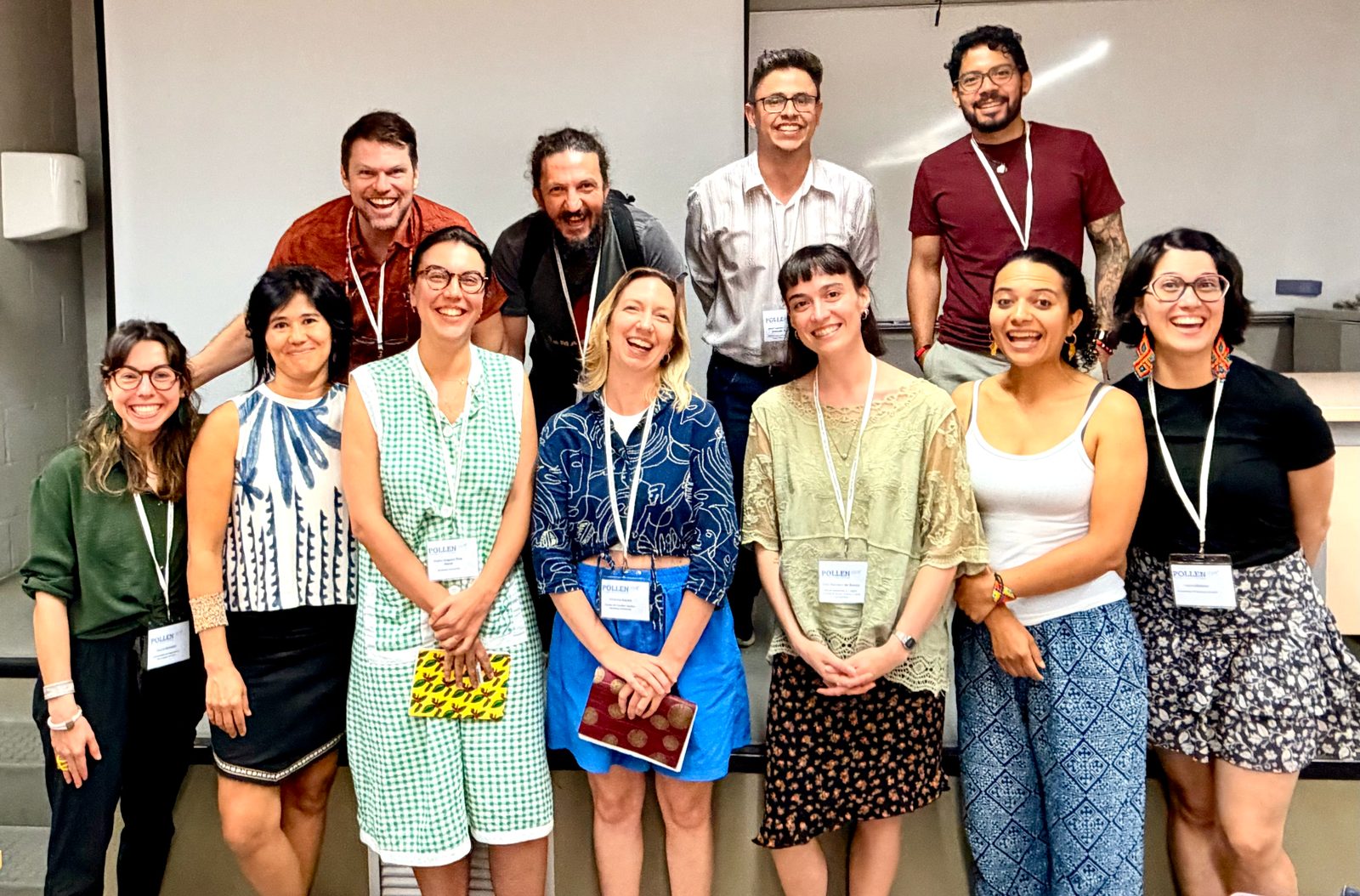
We, the convenors Joel E. Correia, José Roberto Porto de Andrade Junior and Silvia de Melo Futada were honored to convene the panel "Storytelling Political Ecology from Latin America: conflicts, resistance, alternatives." Across two sessions, the panel brought together 12 presentations and scholars affiliated with institutions in Brazil, the United States, Mexico, Colombia, Ecuador, Peru, Portugal, Spain, Germany, and the United Kingdom, while the research itself engaged territories and struggles across broadly Latin America. The panel explored environmental conflicts, community territorial governance, extractivism, feminist political ecology, food sovereignty, restoration, water justice, racial capitalism, counter-mapping, and decolonial futures not as isolated case studies, but as living epistemologies and theories emerging from territories in struggle. Rather than treating Latin America as a site to which theory is applied, our discussions highlighted the region as a place where theory is continually produced through collective resistance, relational governance, and pluriversal ways of knowing.
More than 1,500 researchers, activists, artists, organizers, and community leaders from around the world gather to imagine more just socioecological futures. An inspiring week in Barcelona building POLLEN — the Political Ecology Network — reminded us that Political Ecology is much more than an academic field, it is a vibrant, global community committed to confronting ecological crises while cultivating hope, solidarity, and alternative futures that are already in course.
A heartfelt thank you to everyone who made this space possible: the panelists Laura Botero Arellano and Francisco Sanchez, Yoalli Rodríguez, Maria Ximena Gonzalez Serrano, Rayna Benzeev, Inês Ferreira de Sousa, Pietra Cepero Rua Perez, Leonardo Halszuk, Johanna Kocks. Our deepest thanks go to the Political Ecology Network, the outstanding ICTA-UAB and local organising committee, and everyone who contributed to making this conference such an intellectually generous and politically inspiring gathering. Most of all, thank you to everyone who shared ideas, asked difficult questions, challenged assumptions, and built new collaborations.
These conversations do not end in Barcelona. They continue in our research, partnerships, friendships, and collective efforts to imagine and build more just and livable worlds.